
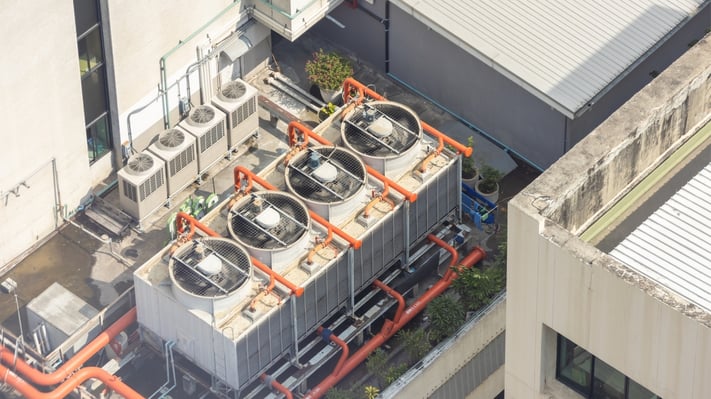
Learn why mission critical HVAC systems are essential for data centers, uptime protection, cooling reliability, preventive maintenance, and operational continuity.
When most people think about HVAC, they think about comfort. Heating in the winter. Cooling in the summer. Keeping a building comfortable for employees, customers, or visitors.
But in a data center, HVAC is not just about comfort.
It is about uptime, operational continuity, and protecting critical infrastructure.
Think about how quickly people notice when a cell phone network goes down, an online banking platform becomes unavailable, or a major retailer experiences downtime during a busy shopping period. Behind many of those digital systems are data centers operating around the clock.
Those environments rely heavily on mission-critical HVAC systems to maintain stable temperatures, proper airflow, humidity control, and reliable cooling performance 24 hours a day, 7 days a week
When the mechanical systems supporting those environments fail, the impact can reach far beyond the building itself. It can affect customers, employees, transactions, communications, and business operations.
That is why data center HVAC matters.
When data center cooling systems fail, the impact can extend far beyond the building itself. Downtime can affect communications, financial transactions, cloud-based systems, customer experience, productivity, and business operations.
That is why mission-critical HVAC matters.
Mission-critical HVAC refers to the specialized heating, cooling, ventilation, and environmental control systems designed to support facilities where downtime is not an option. While these systems are essential in many industries, they are especially important in data centers where cooling reliability directly supports uptime.
What Is Mission Critical HVAC?
Mission-critical HVAC involves the design, maintenance, monitoring, and support of HVAC systems in environments where environmental conditions directly affect operations.
In a standard commercial building, HVAC systems are primarily focused on occupant comfort. If a system experiences an issue, operations may continue while repairs are scheduled.
In a data center, the stakes are significantly higher.
Servers, storage systems, power infrastructure, and networking equipment generate heat continuously. Data center HVAC systems must remove that heat consistently to maintain reliable operating conditions. If cooling performance slips, temperatures can rise rapidly, placing equipment and uptime at risk.
Mission critical HVAC systems are designed around reliability, redundancy, preventive maintenance, and emergency readiness. The goal is not simply to cool a building. The goal is to support continuous operation and reduce operational risk.
Why Data Centers Depend on Mission Critical HVAC Systems
Modern businesses rely on data centers for cloud computing, artificial intelligence, communications, banking systems, security infrastructure, healthcare operations, and countless other digital services.
Behind that digital infrastructure is a carefully controlled physical environment.
Data center cooling systems must manage heat removal, airflow, humidity, ventilation, and changing equipment loads around the clock. Unlike traditional commercial HVAC systems, mission-critical cooling systems do not have an off-season.
Even during colder months, servers and networking equipment continue generating significant heat. Reliable cooling remains essential every hour of every day.
When mission-critical HVAC performance declines, data centers may experience:
• Rising equipment temperatures
• Increased stress on servers and electrical systems
• Reduced equipment performance
• Emergency shutdowns
• Higher energy consumption
• Shortened equipment lifespan
• Operational disruption
• Risk to uptime and service continuity
How Mission Critical HVAC Systems Differ from Standard Commercial HVAC Systems
While standard commercial HVAC systems and mission-critical HVAC systems may use similar equipment, the expectations and operational requirements are very different.
Mission-critical environments require a proactive approach focused on uptime, redundancy, environmental precision, and emergency preparedness.
Uptime Comes First
In a traditional office environment, a cooling issue may create discomfort. In a data center, a cooling issue can threaten business operations and equipment reliability.
Mission-critical HVAC service focuses on reducing operational risk, improving reliability, and preparing for potential failures before they occur.
Redundancy Creates Operational Protection
Redundancy is one of the most important components of mission-critical cooling systems.
Data center HVAC redundancy may include backup cooling equipment, redundant pumps, additional air-handling units, temporary equipment connections, spare-parts planning, and N+1 system configurations.
Redundancy does not eliminate failure. It helps ensure the facility has options when failures occur.
Environmental Conditions Require Precision
Data centers require precise environmental control. Stable airflow, consistent temperatures, proper humidity levels, and ventilation all play a role in protecting critical infrastructure.
Mission critical HVAC technicians must understand more than individual equipment operation. They must understand how the entire mechanical system supports the facility as a whole.
Preventive Maintenance Reduces Downtime Risk
Preventive maintenance is one of the most effective ways to reduce risk within mission critical facilities.
A reactive service approach can increase the likelihood of emergency repairs, operational disruption, and unexpected downtime.
Data center preventive maintenance programs often include:
• Inspecting mechanical equipment
• Cleaning coils and filters
• Testing controls and sensors
• Reviewing airflow performance
• Inspecting motors, pumps, bearings, and belts
• Monitoring refrigerant systems
• Identifying aging equipment
• Planning repairs before peak demand periods
Emergency Planning Should Happen Before an Emergency
The best mission-critical HVAC response plans are created before a failure occurs.
Data centers should understand how they would respond if a cooling system, control system, pump, or critical piece of infrastructure failed unexpectedly.
Strong contingency planning can help facilities respond faster, reduce confusion, and minimize operational disruption.
Why the Right Data Center HVAC Partner Matters
Not every commercial HVAC provider is equipped to support mission critical environments.
Data center HVAC service requires experience with uptime planning, redundancy strategies, emergency response, preventive maintenance, and critical infrastructure support.
The right mission critical HVAC partner should understand how mechanical systems affect the entire operation, not just individual pieces of equipment.
An experienced partner can help support:
• Mission critical HVAC service
• Data center preventive maintenance
• Emergency mechanical service
• Cooling system assessments
• Planned outage support
• Temporary equipment planning
• Rental equipment coordination
• Long-term system reliability planning
How Tate Engineering Supports Mission Critical HVAC for Data Centers
Tate Engineering supports mission critical HVAC environments throughout the Mid-Atlantic with preventive maintenance, emergency mechanical service, planned outage support, temporary equipment solutions, and system readiness planning.
For data centers, Tate Engineering focuses on helping facilities reduce operational risk, improve cooling reliability, and prepare for unexpected failures before they impact uptime.
Services include:
• Mission critical HVAC service
• Data center HVAC maintenance
• Emergency mechanical service
• Preventive maintenance programs
• Mechanical system assessments
• Planned outage support
• Temporary heating and cooling support
• Mobile boiler room rentals
• Rapid-response service throughout the Mid-Atlantic
Frequently Asked Questions About Mission Critical HVAC
What is mission critical HVAC?
Mission critical HVAC refers to specialized heating, cooling, ventilation, and environmental control systems designed to support facilities where downtime is not an option.
Why is HVAC important in data centers?
Data center HVAC systems help maintain stable temperatures, airflow, and humidity levels that protect servers and critical infrastructure from overheating and operational disruption.
What happens if cooling fails in a data center?
Cooling failures can increase equipment temperatures, stress the electrical infrastructure, increase downtime risk, and impact operational continuity.
What is redundant cooling in a data center?
Redundant cooling refers to backup cooling capacity and systems designed to support uptime if primary equipment experiences failure or maintenance issues.
Mission critical HVAC systems play a critical role in protecting data center uptime, equipment reliability, and operational continuity.
As data centers continue growing in importance across industries, reliable cooling systems, preventive maintenance, redundancy planning, and emergency preparedness become even more essential.
Data centers require more than reactive HVAC service. They require a strategic partner who understands uptime, reliability, and operational risk.
Tate Engineering helps mission critical facilities throughout the Mid-Atlantic improve cooling reliability with preventive maintenance, emergency service, contingency planning, and mission critical HVAC support.
Contact Tate Engineering to start building a data center HVAC readiness plan before the next emergency.
